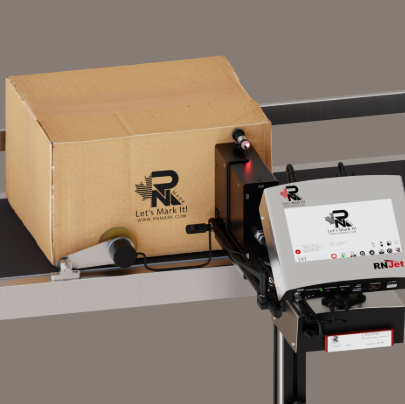

Product identification is an important part of manufacturing and supply-chain management. Components often need serial numbers, batch codes, logos, dates, or other identifying information so that businesses can distinguish products, maintain records, and support quality control. A reliable marking process helps keep this information legible throughout production, storage, and use.
Laser marking is one technology manufacturers can consider when evaluating ways to create durable identification on compatible materials.
Why Accurate Marking Matters
Identification marks serve several purposes. Serial numbers help track individual components, batch codes support production records, and logos communicate brand identity. In regulated or quality-sensitive industries, marks may also contribute to traceability and documentation requirements.
Poorly positioned or unreadable marks can create practical problems. Operators may struggle to identify a component, records may become harder to reconcile, and products may require additional inspection or rework.
A marking process should therefore be evaluated according to legibility, consistency, durability, production speed, and compatibility with the material.
How Laser Marking Works
Laser marking uses controlled laser energy to create a visible or otherwise detectable change on a material’s surface. Depending on the material and process, this change may involve colour alteration, surface oxidation, engraving, or another controlled effect.
The final appearance depends on the material, laser wavelength, power, pulse settings, scanning speed, and marking pattern. Not every material responds in the same way, and some products may require a coating or marking method specifically suited to their surface.
For businesses comparing available options, the Clyertek portable laser marking machine provides a product reference for researching portable marking equipment and identifying a suitable configuration for the intended work.
Where Portable Marking Can Be Useful
Workshop and production-floor identification
Manufacturers may need to mark components at different workstations or handle products that are inconvenient to move. Portable equipment can offer flexibility when the unit is designed for the task and a safe, controlled operating area can be established.
Before purchasing, determine whether the complete system can be positioned securely and whether the workpiece can be held in the required orientation.
Serial numbers and batch codes
Unique identifiers can support traceability and inventory management. Laser marking may be suitable for producing repeatable codes on compatible materials, provided the system can create marks with sufficient contrast and readability.
For codes that must be scanned, test the marking under realistic lighting and inspection conditions. A mark that looks clear to the operator may not always scan reliably.
Logos and product branding
Businesses may use laser marking to apply logos or other identifying graphics to selected products. The final appearance depends on the material and the design’s detail, so sample testing is important before a large production run.
Artwork should be prepared in a suitable format and checked for scale, line thickness, and alignment before marking begins.
Choosing the Right Marking Configuration
Equipment selection should begin with the materials and products to be marked. Metals, plastics, coated surfaces, and other materials can respond differently to laser energy. Confirm that the proposed machine is suitable for the actual substrate.
Other considerations include:
- Required marking area and detail.
- Output power and marking speed.
- Supported file formats and software.
- Serial-number or variable-data requirements.
- Fixture design and workpiece positioning.
- Portability and operator ergonomics.
- Maintenance, training, and technical support.
Power alone does not determine marking quality. A suitable configuration must produce the required contrast and durability without creating unacceptable surface changes.
Testing Mark Quality and Durability
A pilot run should use representative production parts. Test the intended logo, text, code, or serial-number format on the actual material and surface finish.
Inspect the marks for contrast, sharpness, alignment, and readability. If the mark must remain legible after exposure to handling, cleaning, abrasion, heat, or weather, evaluate it under relevant conditions.
For traceability systems, verify that marked codes can be read consistently by the scanners or inspection tools used in the business. Establish acceptance criteria before the production process is approved.
Integrating Marking Into Production
Marking can take place at several points in the manufacturing workflow. Marking too early may risk damaging or obscuring identifiers during later processing, while marking too late may complicate identification during intermediate production stages.
Map the process to determine where identification provides the greatest benefit. Coordinate the marking step with inspection, packaging, inventory records, and any software used to track serial numbers or batches.
Standard operating procedures should specify the approved artwork, machine settings, part orientation, verification method, and handling of rejected marks.
Safety and Workplace Planning
Laser marking systems require controls appropriate to their laser classification and operating configuration. Hazards may include direct or reflected radiation, fumes from certain materials, hot surfaces, and electrical risks.
A risk assessment should determine whether an enclosure, interlocks, restricted access, warning indicators, suitable laser-rated eyewear, and local exhaust ventilation are necessary. Material compatibility should be confirmed before processing, especially when marking plastics, paints, or coatings that may release hazardous fumes.
Operators should receive training and follow the manufacturer’s safety instructions. A portable machine must not be used in uncontrolled surroundings simply because it can be moved easily.
Frequently Asked Questions
1. What information can laser marking be used to apply?
Depending on the equipment and material, it can produce text, serial numbers, batch codes, logos, and other graphics. The result must be tested for the required legibility and durability.
2. Is portable laser marking suitable for all materials?
No. Material composition, surface finish, colour, and the laser configuration influence the result. Test the actual substrate before production.
3. How can manufacturers improve marking consistency?
Use approved artwork, validated settings, suitable fixtures, regular inspections, and documented procedures. Variable-data systems should also be checked for correct information.
See also: Finding Reliable Materials for Footwear, Furniture, and Fashion Production
Conclusion
Product marking supports traceability, quality control, and brand identification across many industries. Portable laser marking technology may offer flexibility for businesses that need to identify compatible components in different work areas. The best results come from matching the machine to the material, validating mark quality, integrating identification into the production workflow, and maintaining appropriate safety controls.
